The Ford Mustang Story: How America's Original Pony Car Was Born
From its 1964 World's Fair debut to Bullitt, the Shelby GT350 and today's models, here's how the Ford Mustang became an American icon.
In this article
Few cars capture the American imagination like the Ford Mustang. Affordable, sporty and endlessly customizable, it created an entire category of car, the "pony car," and has stayed in continuous production for six decades.
The idea: a sporty car for young buyers
In the early 1960s, Ford executives, led by Lee Iacocca, saw an opportunity: the baby boom generation was coming of age and wanted something stylish and fun that didn't cost a fortune. To keep costs down, the Mustang used many components from the economical Ford Falcon, wrapped in a sporty body with a long hood and short rear deck.
A record-breaking debut
Ford unveiled the Mustang at the New York World's Fair on April 17, 1964. It was a sensation. The car arrived with a low base price, around $2,400, and a long list of options that let buyers make it as basic or as powerful as they liked. Demand was enormous, and Ford sold over 400,000 Mustangs in roughly its first year, one of the most successful launches in automotive history.
Collectors often call these early cars "1964½" models because they went on sale before the normal 1965 model year began.
The pony car wars
The Mustang's success prompted competitors to respond. Chevrolet introduced the Camaro for 1967, Pontiac launched the Firebird, and Plymouth and Dodge pushed the Barracuda and later the Challenger. Mustangs grew bigger and more powerful through the late 1960s, with big-block engines and models like the Mach 1 and Boss 302.
Shelby and Hollywood
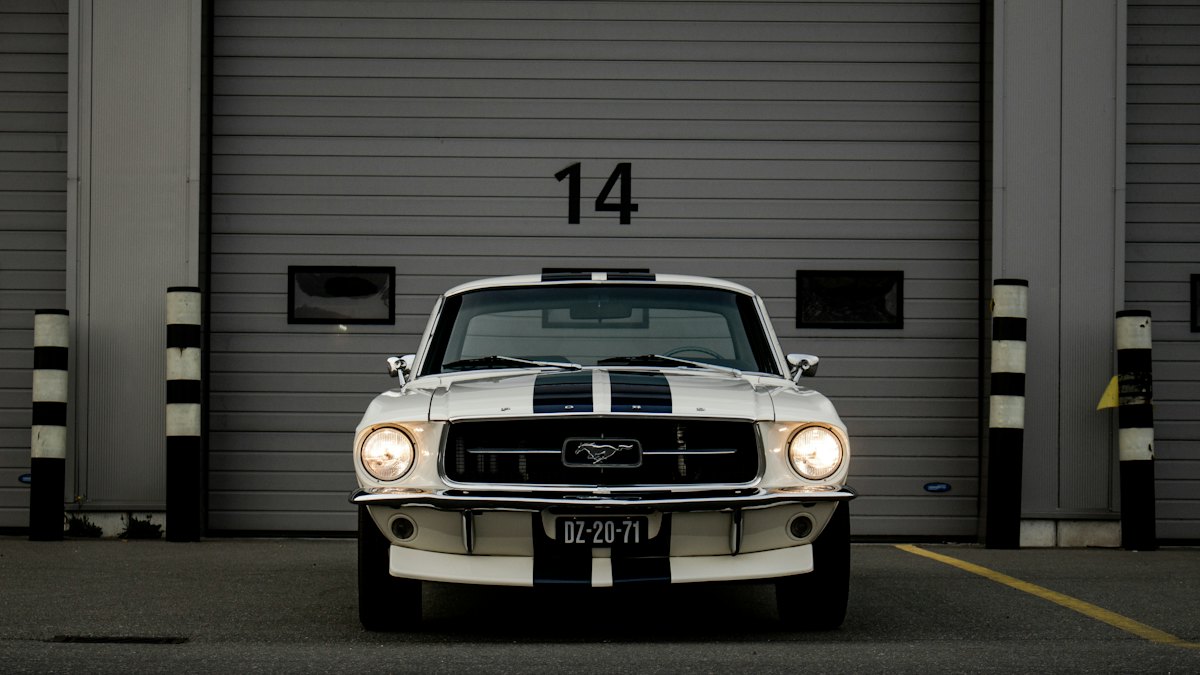
Racer Carroll Shelby turned the Mustang into a track weapon with the Shelby GT350, introduced for 1965, followed by the GT500. On screen, Steve McQueen's dark green 1968 Mustang GT in the film Bullitt starred in one of the most famous car chases ever filmed and remains one of the most iconic movie cars.
Generations through the decades
- 1974: Mustang II. A smaller, more fuel-efficient car arrived amid the oil crisis.
- 1979: "Fox body." A lighter platform that lasted through 1993, beloved by today's enthusiasts.
- 1994: SN95. A modernized design that brought back classic styling cues.
- 2005: Retro revival. Styling that deliberately echoed the 1960s originals.
- 2015: Global Mustang. Independent rear suspension, and sales expanded worldwide.
- 2024: Seventh generation. The latest Mustang carried the V8 tradition forward.
Collecting a classic Mustang
Thanks to huge production numbers and strong aftermarket support, classic Mustangs are among the most accessible collector cars. Nearly every part is reproduced. Original, well-documented cars and rare high-performance models command premium prices. Read our checklist for buying your first classic car before you shop.