12 Surprising Facts About American History You Probably Didn't Learn in School
The Declaration of Independence wasn't signed on July 4, George Washington didn't have wooden teeth, and the Statue of Liberty wasn't always green.
In this article
- 1. Most signers signed the Declaration on August 2, 1776
- 2. Adams and Jefferson died on the same day, July 4, 1826
- 3. George Washington's teeth weren't wooden
- 4. The Statue of Liberty used to be copper-colored
- 5. The U.S. bought Alaska for about 2 cents an acre
- 6. The Smithsonian was funded by a man who never visited America
- 7. Ben Franklin didn't formally propose the turkey as the national bird
- 8. "Under God" was added to the Pledge in 1954
- 9. Hawaii was the last state to join the Union
- 10. Mount Rushmore took 14 years to carve
- 11. The transcontinental railroad was completed in 1869
- 12. Washington, D.C., wasn't the first capital
History class covers the big events, but some of the most interesting details get left out. Here are twelve surprising, and true, facts about American history.
1. Most signers signed the Declaration on August 2, 1776
The Continental Congress adopted the Declaration of Independence on July 4, 1776, but most delegates signed the official engrossed copy on August 2. Some signed even later.
2. Adams and Jefferson died on the same day, July 4, 1826
Former presidents John Adams and Thomas Jefferson, once rivals and later friends, both died on the 50th anniversary of the Declaration's adoption, just hours apart.
3. George Washington's teeth weren't wooden
Washington suffered from tooth loss most of his life, but his dentures were made from materials including ivory, metal and human and animal teeth, not wood.
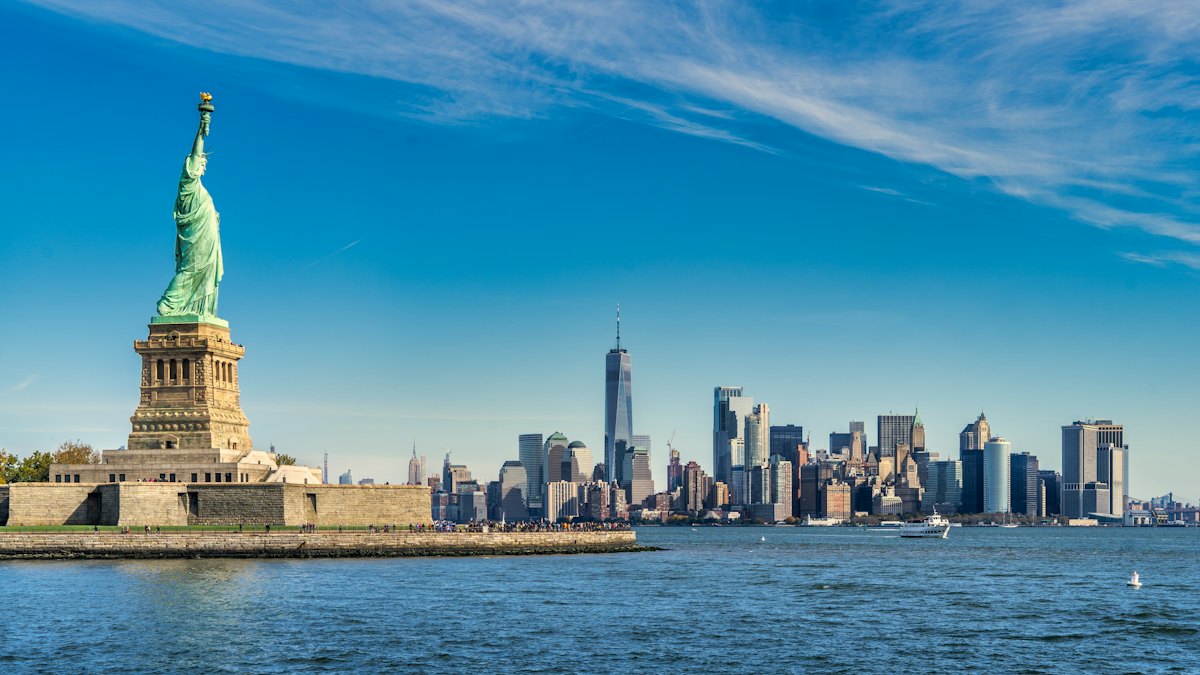
4. The Statue of Liberty used to be copper-colored
When it was dedicated in 1886, Lady Liberty was a shiny copper-brown. Over the following decades, exposure to the elements created the green patina we know today, which also protects the copper underneath.
5. The U.S. bought Alaska for about 2 cents an acre
In 1867, the United States purchased Alaska from Russia for $7.2 million. Critics mocked it as "Seward's Folly," after Secretary of State William Seward, but it proved to be one of the best deals in history.
6. The Smithsonian was funded by a man who never visited America
British scientist James Smithson left his fortune to the United States to found "an establishment for the increase and diffusion of knowledge," even though he never set foot in the country.
7. Ben Franklin didn't formally propose the turkey as the national bird
In a 1784 letter to his daughter, Franklin criticized the bald eagle as a bird of "bad moral character" and praised the turkey as more respectable, but he never formally proposed the turkey as a national symbol.
8. "Under God" was added to the Pledge in 1954
The Pledge of Allegiance was written in 1892 by Francis Bellamy. The words "under God" were added by Congress in 1954.
9. Hawaii was the last state to join the Union
Hawaii became the 50th state on August 21, 1959, a few months after Alaska became the 49th.
10. Mount Rushmore took 14 years to carve
Work began in 1927 and ended in 1941. Remarkably, no workers died during the carving.
11. The transcontinental railroad was completed in 1869
The Central Pacific and Union Pacific lines met at Promontory Summit, Utah, on May 10, 1869, cutting cross-country travel from months to about a week. Read the full story of the transcontinental railroad.
12. Washington, D.C., wasn't the first capital
Before Washington, D.C., the federal government met in several cities, including New York City and Philadelphia. Congress first convened in Washington in 1800.
Think you know your history? Test yourself with our free American trivia quiz.